Buffalo State receives 2026 Carnegie Community Engagement Classification

Earlier this year, Buffalo State received the 2026 Carnegie Community Engagement (CE) Classification, an elective designation awarded by the American Council on Education (ACE) and the Carnegie Foundation for the Advancement of Teaching that highlights an institution’s commitment to community engagement. This is a renewal of the same classification Buffalo State was granted in 2016.
“Higher education is a vital economic engine for us all. Our colleges and universities not only fuel science and innovation, they build prosperity in rural, urban and suburban communities nationwide,” said Timothy F.C. Knowles, president of the Carnegie Foundation. “We celebrate each of these institutions, particularly their dedication to partnering with their neighbors—fostering civic engagement, building useable knowledge, and catalyzing real world learning experiences for students.”
The CE Classification has been the leading framework for institutional assessment and recognition of community engagement in U.S. higher education for the past 19 years. The application was a multi-year effort, beginning with a process of self-study by each institution, with a focus on specific criteria from the 2023-24 academic year.
“The institutions receiving the 2026 Community Engagement Classification exemplify American higher education’s commitment to the greater good,” said ACE President Ted Mitchell. “The beneficiaries of this unflagging dedication to public purpose missions are their students, their teaching and research enterprises, and their wider communities.”
“Buffalo State has had an ongoing commitment to community engagement for a long time, and this was a reaffirmation of that,” said Alan Delmerico, director for Learning, Engagement, and Development Services (LEADS). “This really reflects our underlying nature, what’s in the DNA of this institution.”
Delmerico led Buffalo State’s 2026 Carnegie Classification application with support from the Buffalo State Community Partnership Council—a campuswide group that reflects the institution’s diversity and includes by including representatives from Academic Affairs, Marketing and Communications, the Small Business Development Center, and the Burchfield Penney Art Center.
“Buffalo State has had an ongoing commitment to community engagement for a long time. This really reflects our underlying nature, what’s in the DNA of this institution.”
“Earning the Carnegie Elective Classification for Community Engagement is the result of an extraordinary, two year effort by many,” said Scott Goodman, assistant vice president of graduate, research, and special programs. “It is gratifying to have an external review affirm the depth and impact of our work with the community. This process challenged us to highlight the most significant accomplishments from a wealth of meaningful examples.”
“No single person is going to know everything that’s happening at the level you need to know them at to apply,” Delmerico added. “You’ve got to really reach down deep with your roots and draw information up to accurately respond. I think we put a great application together that was representative of our institution and what our strengths are and continue to be.”
The application process involved collecting and providing information about the institution’s community engagement efforts, including institutional mission and culture; leadership priorities, vision, and strategic plan; how the institution ensures that students, faculty, staff, and community partners have equitable access and opportunity to community engagement activities; how the institution tracks and assesses engagement with communities; examples of academic-community partnerships; and more.
“Community engagement isn’t something extra for us,” Goodman said. “It’s central to who we are and how we embrace our role as an anchor institution in the urban core of Buffalo.”
As SUNY’s urban-engaged anchor institution, Buffalo State emphasizes civic and community engagement, coordinating high-quality, reciprocal partnerships with local, regional, national, and international community-based organizations that positively influence students, the university, and the broader community. Even without a centralized office dedicated to these efforts, community engagement remains an integral part of the Buffalo State’s ethos in numerous ways, including (but not limited to):
- The incorporation of high-impact applied-learning opportunities throughout the curriculum that offer students community-based experiences, such as service learning, internships, field experiences, applied research, and study-abroad opportunities.
- Programs housed in the School of Education and Applied Professions, including Professional Development Partnerships, which maintains relationships with over 100 school and community partners and provides myriad opportunities for community youth to engage in enrichment on campus, including in arts (Burchfield Penney), sciences (Whitworth Ferguson Planetarium), and education.
- Buffalo State University’s Great Lakes Center—the only field station on the Great Lakes within the SUNY system—which offers two interdisciplinary applied environmental science programs designed to protect and preserve the Great Lakes ecosystem and its surrounding watersheds. The GLC supports the Western New York region through research, partnerships, and educational resources, as well as by providing data that informs decisions about ecosystem health, climate resiliency, maritime operations, and public health and safety.
- The Small Business Development Center, which serves the broader WNY region with free management and technical assistance to start-ups and existing small businesses.
- The Anne Frank Project, which uses the power of stories as vehicles for community building, conflict management, and identity exploration and delivers professional development opportunities for K-12 and higher education teachers. Its program Sophia’s Legacy exposes working educators to the multiple lessons from the Holocaust, other Genocides, and current world conflicts, then provides tools to bring these lessons into their schools and classrooms.
- The Continuing Professional Studies Office, which partners with community organizations to develop programs that create meaningful, shared impact through initiatives like the Patient Care Management program—offered in collaboration with the CAO of WNY, the Community Health Center of Buffalo, and the Buffalo Federation of Neighborhood Centers—which supports career advancement for incumbent workers while strengthening culturally responsive healthcare delivery in historically underserved communities.
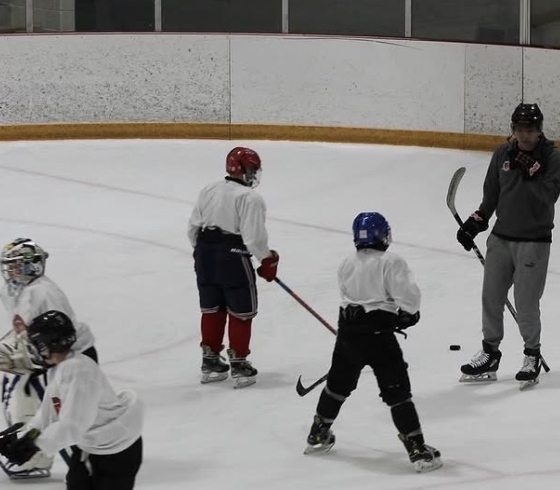
- Buffalo State Athletics teams, which participate in numerous community engagement activities such as: running clinics and camps for elementary students; delivering food to families who receive free meals through their school districts; volunteering at Provisions 139 to serve local families in need; taking shifts at the non-for-profit Buffalo Sports Project; assisting with the Champion Project; reading to students during Read Across America Day; volunteering at the Special Olympics Polar Plunge; serving ads mentors with the WBCS Gentlemen’s Club; and hosting raffles and events that support community initiatives and organizations like FeedMore WNY, Buffalo City Missions, the Buffalo Bills Foundation, and more.
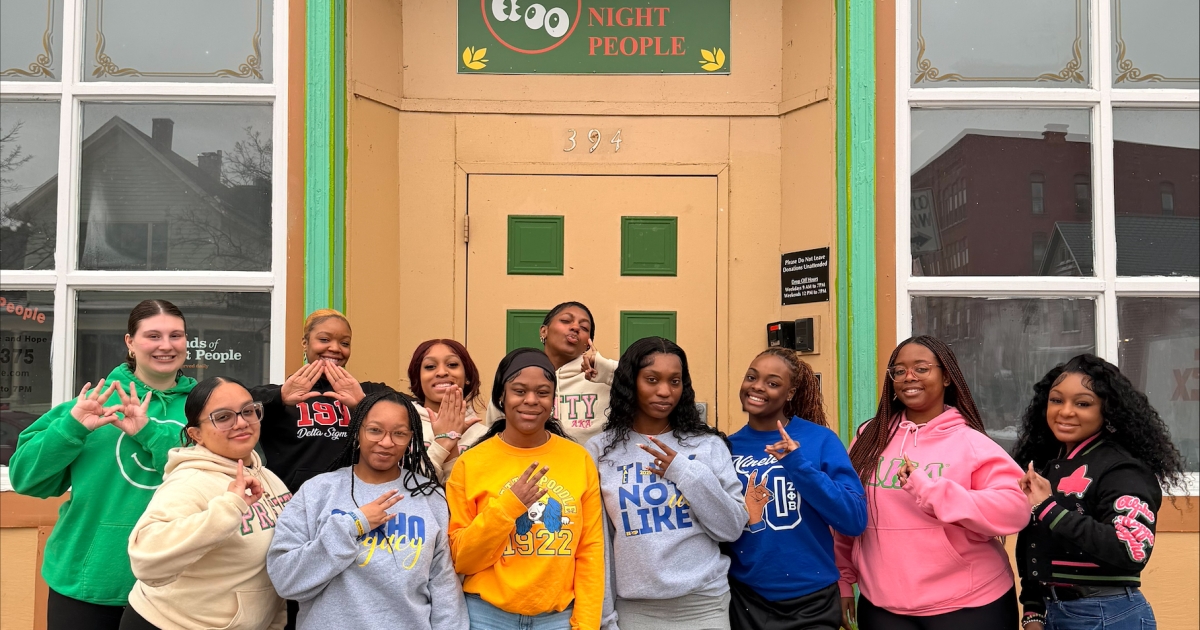
- Buffalo State Greek Life organizations, which engage in a variety of volunteer and service opportunities such as: assisting with food and clothing drives both independently and through Taylor’s Harvest; sorting donations with Friends of Night People; and buying Angel Trees at the holidays.
- New and innovative partnerships, such as this year’s student designers for the annual student-produced fashion show, RUNWAY, working with local not-for-profit organizations and creating collections that amplify these organizations’ missions.
- Public events and programs hosted by various campus entities.
“The nature of Buffalo State’s connection to the community remains,” Delmerico said. “The things that Buffalo State has done over the past decade are part of our set of values. The mutual benefit that the community and we as an institution have been able to experience is at the heart of what the Carnegie Classification is about.”
About the Carnegie Classifications
The Carnegie Classifications are the nation’s leading framework for categorizing and describing colleges and universities in the United States. Utilized frequently by policymakers, funders, and researchers, the Classifications are a critical benchmarking tool for postsecondary institutions. ACE and the Carnegie Foundation announced a partnership in February 2022 to reimagine the Classifications to better reflect the diversity of postsecondary institutions and more completely characterize the impact that today’s institutions have in society.