Things to know about the 18th Annual Social Justice Festival

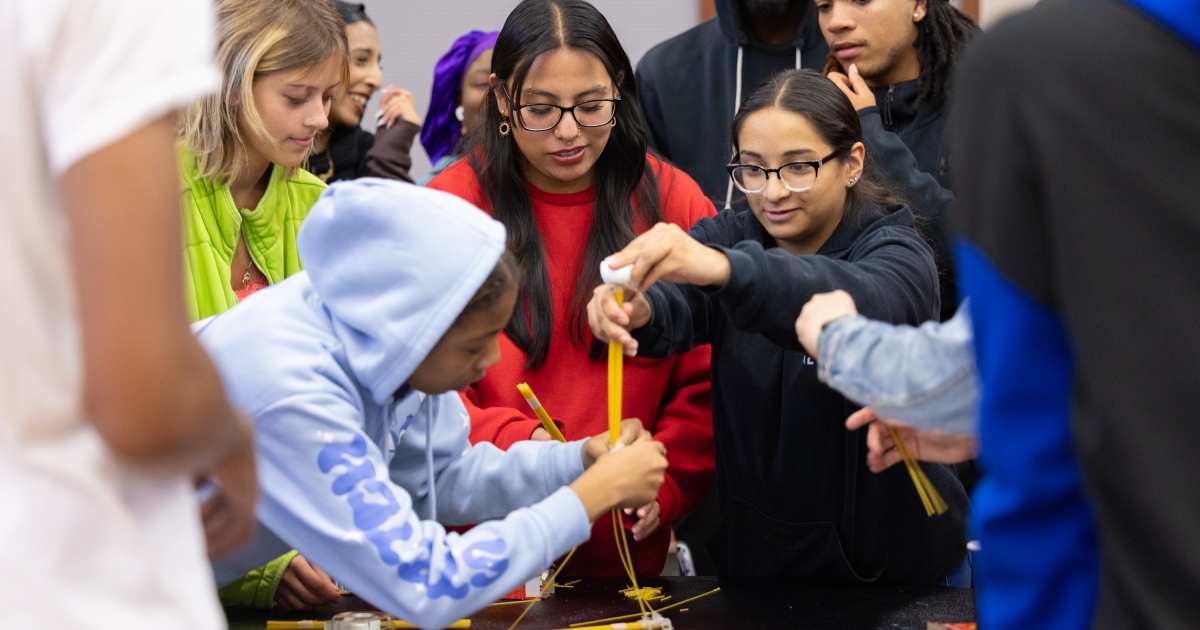
Since its inception in 2009, the Social Justice Festival, hosted by Buffalo State’s Anne Frank Project (AFP), has invited participants to build community, manage conflict, explore identity, and wrestle with pressing issues like systematic racism, social responsibility, mental health, inclusion, healing, and more. This highly experiential festival, which is free and open to all, offers workshops, performances, and art exhibits that challenge, teach, and encourage exploration.
The 18th annual Social Justice Festival, “Where Change Begins,” will take place October 6-8. The theme was chosen through AFP’s standard process: members of the AFP advisory committee create a list of five potential themes that reflect Buffalo State’s current trends and needs, as well as national and international discussions, dilemmas, and issues. This list is then shared with university leadership to ensure academic and campus alignment. This year, said AFP founding director Drew Kahn, the decision was instantaneous.
“‘Where Change Begins’ is a thrilling way to activate this constant buzz, this constant personal reminder, this nagging tap on our social media shoulders that seems to be stating: 'You and the world aren’t enough as you are—you must improve; you must change!’” Kahn said. “The need for change is obvious and real—it’s how we evolve—but change is not a product of complaining about what is and stopping. Authentic, healthy, evolutionary change must be fueled by lessons, strategies, and actions. That’s what we are asking of our students at the festival. Change won’t come by talking about it; it will only come by initiating it.”
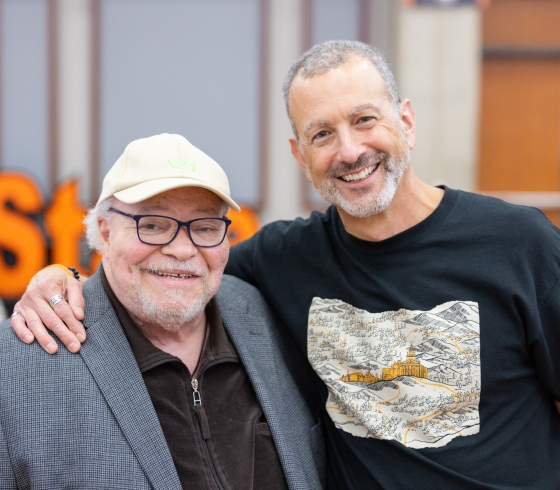
AFP Director Drew Kahn (right) with acclaimed actor Stephen McKinley Henderson at the 17th annual Social Justice Festival.
“Meaningful change begins when we align our values with our actions,” added Provost Amitra Wall. “The Social Justice Festival gives us an opportunity to reflect on what we believe, listen to one another, and consider what each of us can do to make a difference. Our students should leave Buffalo State knowing that they have the capacity to create change. Sometimes that change begins with a difficult conversation, a different perspective, or simply the courage to take the first step.”
Here are five things to know about this year’s festival.
Participants curate their festival experience—and it’s interactive.
The Social Justice Festival schedule is packed with an incredible variety of sessions, but attendees do not attend every workshop. Sessions occur simultaneously, allowing participants to choose what most interests them. This is important, because the festival requires active engagement.
“Participants should be prepared to participate, not just sit and listen,” said AFP assistant director Jonise Hall. “Workshops include things like movement, writing, artmaking, discussions, and other hands-on activities. By the end of each session, our hope is that students and other festival participants walk away with something, whether that’s something they created, or a new perspective or skill.”
Eager to start selecting sessions? View the full festival schedule here.
Students are highly involved.
Each year, AFP enlists a proposal committee to select workshops and presentations to be included in the festival. This year’s proposal selection committee was made up entirely of students.
“When I was student, I really valued the shared ownership of AFP,” Hall said. “It has always been for students, by students. Because of this, it made the most sense that students select what sessions they and their fellow classmates would want to be a part of. We want it to feel like this festival belongs to them.”
This year’s festival will also feature more student presenters. One session, Empty Bowls: Raising Awareness about Food Insecurity Among College Students by social work student Kaitlin Crawford, ’28, will serve as a kickoff to a larger fundraiser that has occurred in different cities across the country, but is coming to Buffalo State for the first time.
Empty Bowls is a collaboration between Crawford, the Ceramics Club, the Nutrition and Dietetics Department, and Campus House, the university’s hands-on teaching laboratory for hospitality students. Ceramic bowls created by the Ceramics Club will be for sale and include soup created by students from Nutrition and Dietetics, with additional soup provided by Campus House. Soup will be available for pick-up about two weeks later and proceeds will be donated to Milligan’s Food Pantry.
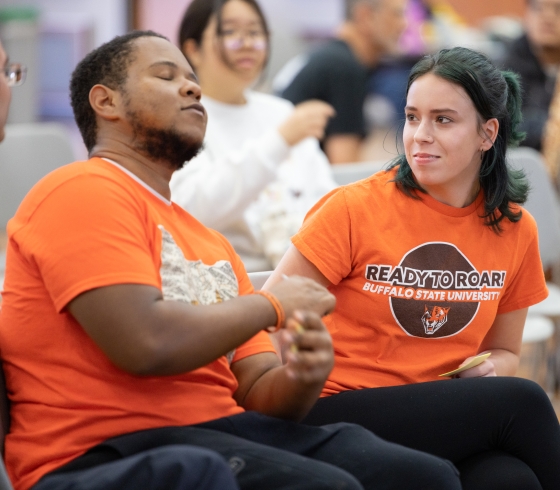
Students are highly involved in the festival as both presenters and participants.
Crawford’s presentation at the Social Justice Festival will take place Thursday, October 8 from 12:15 to 1:30 p.m. Student interns from the Dean of Students’ Office will assist students with completing food stamp applications, and soup order forms will be available.
“As a social work student, I strive for social justice and am always looking for ways to advocate, especially locally,” Crawford said. “The rate at which students struggle with food insecurity is concerning, with thirty-eight to forty-eight percent of students facing food insecurity. Our Empty Bowls Project aims not only to raise awareness but also provide relief with donations to Milligan’s.”
This year’s festival also has more students presenting alongside professors. Examples of these sessions include:
- Hidden Costs, Real Change: An Interactive Idea Lab with Lorena Mathien and students from “The Hidden Cost of Everything” course; Wednesday, October 7 from 3:30 to 5:00 p.m.
- WHY TRY - Know Your Why to Build Your Success with Dana Faye Serure & social studies education teacher candidates; Thursday, October 8 from 10:50 to 12:05 p.m.
AFP has a new way for students to document attendance.
Many students are required to attend the festival as part of their coursework—for example, students enrolled in the social work course SWK40: Evidence Based Practice will be asking the festival audience to complete surveys from which they can later draw conclusions—or involvement in freshman success and retention programs like Roar 2 Success, to help them explore all Buffalo State has to offer.
This year, AFP is introducing a “Social Justice Festival Passport,” a simple and fun way for students to document their attendance.
“Students will receive a card for each day and can have it punched after attending a session,” Hall said. “If they attend multiple sessions, they can collect additional punches. The passport also gives students a way to keep track of the sessions they attended, which can be helpful when they need to reflect on their experience later.”
Campus leadership is key.
Participation from campus leadership has long been a staple of the Social Justice Festival, and this year is no different. This year’s festival lineup includes multiple sessions featuring Buffalo State leadership:
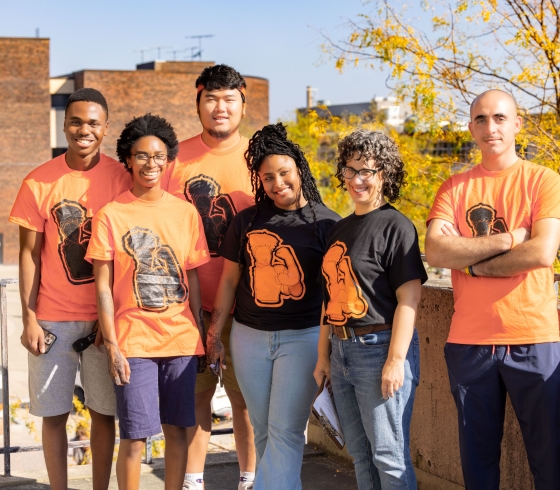
AFP Assistant Director Jonise Hall (center) with student volunteers at the 2023 Social Justice Festival.
- AFP 2026 Welcome! with President Jennifer L. Burris, Ph.D. and SUNY Distinguish Service Professor and AFP Director, Drew Kahn; Tuesday, October 6 from 10:00 a.m. to 12:00 p.m. This session will include welcoming remarks and focus on building interactive rules of engagement for the three days ahead.
- Where Change Begins: Stories of Turning Points, Possibility, and Growth with Provost Amitra Wall & Atta Ceesay, Associate Provost for Student Success and Rretention; Tuesday, October 6 from 1:40 p.m. to 2:55 p.m.
- Research for Change, Service for Change with Provost Amitra Wall and Scott Goodman, Associate Vice President for Graduate, Research, and Special Programs; Wednesday, October 7 from 3:00 p.m. to 4:30 p.m.
“For me, the Social Justice Festival is an opportunity to put our values into practice,” Wall said. “As educators, we have a responsibility to participate alongside our students to listen, to learn, and to engage in conversations that may challenge the way we see the world and one another. This year’s theme asks an important question of all of us: What are we willing to do with what we have learned? Awareness matters, but there comes a point when awareness must lead to action. Our students have tremendous capacity to create change in their professions, their communities, and in the lives of others. Part of our responsibility as educators is to help them recognize that capacity in themselves.”
The festival is not just for the Buffalo State community.
As is the case every year, the Social Justice Festival is free and open to not only Buffalo State students, faculty, and staff, but also the public. There are also sessions being led by members of prominent Buffalo organizations, helping to further connect Buffalo State and its students to the community at large.
Some of these sessions are:
- Fighting Anti-Semitism with Joy: How joyful approaches can influence community perspectives on their Jewish neighbors with Adina Olbrys from The Jewish Museum of Buffalo; Tuesday, October 6 from 1:40 p.m. to 2:55 p.m.
- The Story Swap: Where Change Begins with Lee Becker, ’13, from Peaceprints of WNY Project Blue; Wednesday, October 7 from 12:00 p.m. to 1:30 p.m.
- Weaving a Community: Activating Your Skills, Interests, and Priorities for Social Good with Dawne Hoeg from Stitch Buffalo; Thursday October 8 1:40 p.m. to 2:55 p.m.
“An essential pillar of AFP is community building,” Kahn said. “We teach community building in our classes, we train faculty, staff, and local teachers how to build community in their classrooms, schools, and workplaces, and we actively build our community beyond the campus with local organizations, schools, and businesses. The festival is an opportunity to bring all our communities together to share, teach, listen, and learn. It provides an opportunity for us to remind each other: you are not alone and you and your work matter.”
To register and view a full schedule of festival events, visit the AFP website.
Photos by Buffalo State Marketing & Communications.